
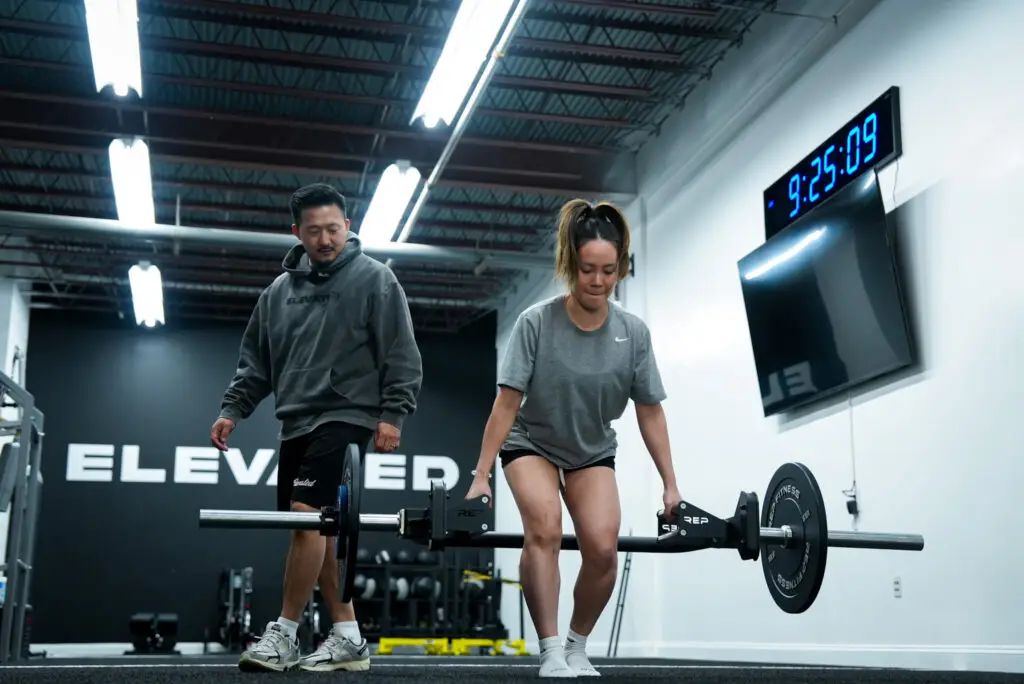
National Physical Therapy Month — from Dr. Jonathan Kim, PT, DPT, Elevated Strength Rehab · Bethesda & Gaithersburg
If you’ve put off seeing a physical therapist because you’re afraid of hearing “stop lifting,” or “stop playing” you’re not alone.
It’s the number one reason active adults avoid getting help for nagging pain. They’d rather train around it, foam-roll it, or hope it fades than be told to sit on the couch for six weeks.
That fear comes from an outdated idea, and it’s costing people months of progress.
Where the “just rest” advice comes from
For decades, the standard medical answer to joint and muscle pain was rest. Stop doing what hurts, and come back when it feels better.
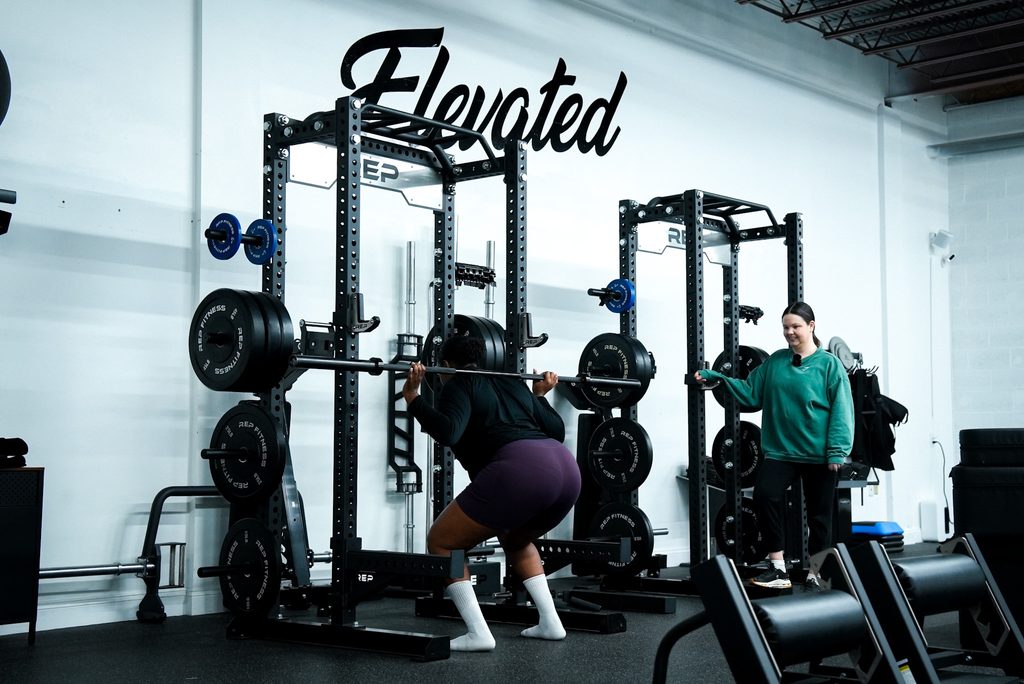
That advice was built for people who don’t train. If you lift four days a week, a long layoff has real costs. Strength starts to slip after a few weeks off, and conditioning fades even faster. The strength and muscle you lose are also what protect your joints.
So you rest for a month and the pain quiets down. Then you come back weaker and less prepared than before, the pain returns, and the cycle repeats.
Pain is a signal, not a diagnosis
One of the most important things I tell lifters is that pain doesn’t automatically mean damage.
A cranky knee on squats usually doesn’t mean something is torn. More often it means a tissue is being asked to handle more load than it’s currently ready for. That’s a capacity problem, and capacity problems are solved with smarter loading, not zero loading.
Tendons are a good example. Rest alone rarely fixes an achy patellar or elbow tendon, because tendons adapt to load. A well-designed loading program usually does far more than a layoff.
What real physical therapy rehab looks like: parallel, not sequential
The old model says rehab and training happen in sequence: stop training, do your rehab, then eventually come back.
The model I use runs them in parallel. We pull three levers:
- Change the movement, not the goal. Knee bothering you on back squats? You keep squatting, with box squats, tempo squats, belt squats or split squats. Shoulder cranky on the barbell press? Try a landmine press, neutral-grip dumbbells or a floor press. The pattern stays and the irritating variation goes.
- Adjust the load and volume. Sometimes the fix is as simple as capping RPE, moving to higher reps, or cutting the one top set that causes the flare-up. Most of your training stays exactly as it is.
- Strengthen the weak link. This is the targeted rehab work for whatever is underprepared. It’s often built into your warm-up or accessory work, so it doesn’t feel like a second program.
You keep training while we rebuild the painful pattern underneath you. Most of my patients keep training the whole way through.
When rest or a referral is the right call
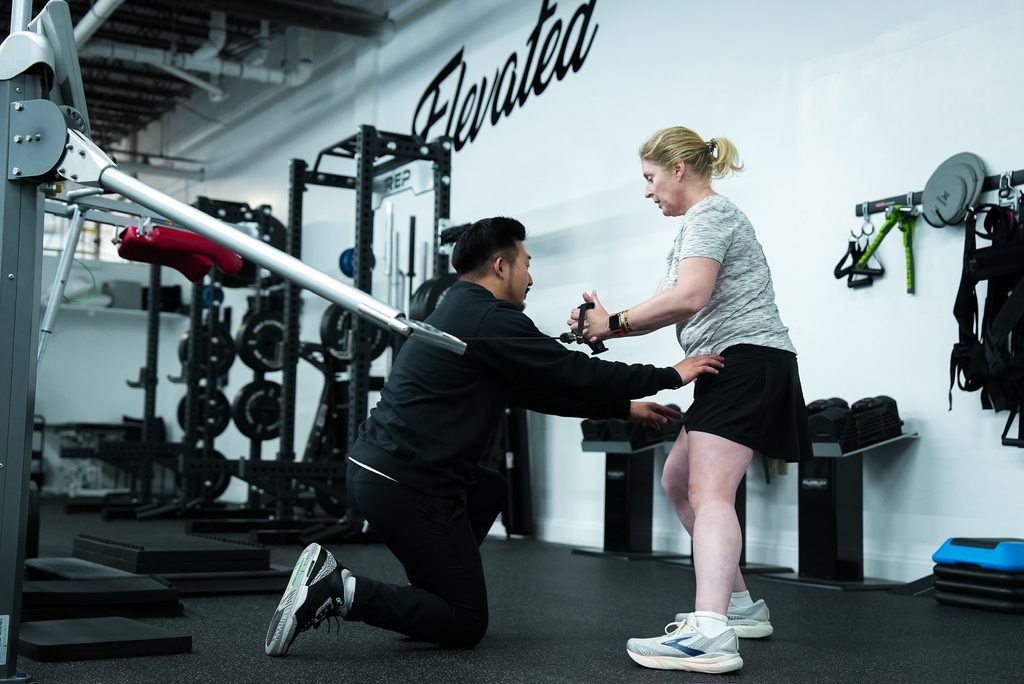
Training through pain isn’t always the answer. After an acute injury, after surgery, or if a fracture is possible, a short break or a referral to a physician may be needed. Part of my job is telling you which situation you’re in.
Come get checked out if:
- the pain started after a specific injury
- there’s significant swelling, or you can’t bear weight
- the pain is changing how you move
- it has lasted more than a week, or it’s getting worse
- you have numbness, tingling or real weakness
- you have pain at night that doesn’t ease when you change position, or it’s affecting your sleep and daily life
The bottom line
You don’t have to choose between fixing pain and staying strong. Done right, they’re the same project.
October is National Physical Therapy Month. If something has been nagging you for more than a week and you’ve avoided getting it looked at because you don’t want to stop training, that’s exactly what I’m here for.
We see patients at two locations: inside Nesfield Performance in Bethesda and a brick and mortar location in Gaithersburg. Sessions are one-on-one, a full hour, and built around how you actually train.
Your $69 evaluation includes:
- A movement assessment to see how you squat, hinge, press and move under load
- A detailed look at the root cause of your pain, not just where it hurts
- Manual therapy, including dry needling/cupping when appropriate, for relief you can feel that day
- An exercise prescription, so you leave with a plan that fits your current training
Not sure if PT is right for you? Book a free discovery call today and we’ll talk through what’s going on.
Dr. Jonathan Kim, PT, DPT
Elevated Strength Rehab · Bethesda & Gaithersburg ·
Gaithersburg- 220 Girard Street STE C Gaithersburg, MD 20877
Bethesda- 7832 Wisconsin Ave Bethesda, MD 20814
(301) 215-2695