
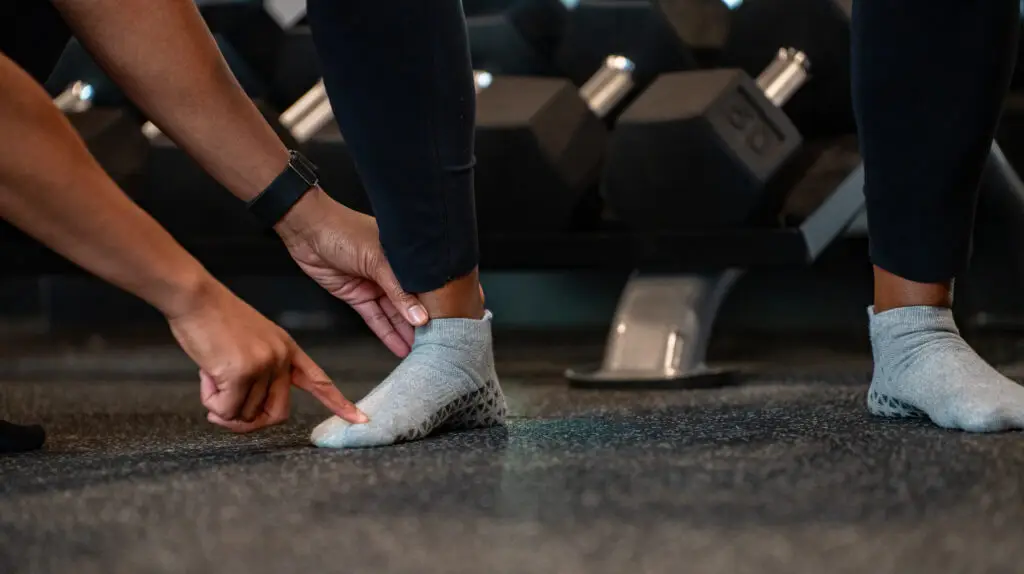
Why stronger feet may be the hidden key to better movement, injury resilience, and longevity.
Most people don’t think about their feet until something hurts. Plantar fasciitis. Achy arches. Tight calves. Balance issues.
But the truth is simple: everything in the body starts from the ground up. Your feet are the foundation of every movement you make, whether that’s walking, lifting weights, sprinting, or simply staying steady as you age.
Recently at Nesfield Performance, we’ve been exploring this idea more deeply through our upcoming workshop: Grounded: Foot Health & Performance
And the more we dig into the science and practice of foot training, the more it becomes clear that strengthening the feet may be one of the most overlooked tools for improving movement, performance, and injury resilience.
My First Introduction: Irradiation and the Ground-Up Concept
My first exposure to the importance of the feet came from a workshop years ago where a coach introduced a concept called irradiation.
The idea was simple:
When you create tension in one part of the body—especially through the ground—it spreads through the rest of the system.
Grip the floor.
Drive through the heels.
Create tension from the ground up.
Suddenly lifts feel stronger, movements feel more stable, and the body moves as one connected unit.
For example, if someone struggles with a bench press, something as simple as driving through the heels and creating leg tension can immediately improve force production. The body becomes more stable, and more of the force you generate actually transfers into the bar.
At the time it almost felt like cheating. Like you just found the nitrous button for the nervous system. But later I learned that what feels like a trick is actually a real neuromuscular principle tied to how the body stabilizes through the ground.
A Deeper Layer: Intrinsic Foot Strength
More recently at Nesfield Performance, I was introduced to another concept that built on that foundation:
Short-foot training. A concept learned from Dr. Emily Splichal from Naboso.
Unlike the “grip the floor” cue often used in strength training, short-foot exercises focus on activating the intrinsic muscles of the foot—the small stabilizing muscles that originate and insert within the foot itself. These muscles play a critical role in maintaining the medial longitudinal arch, which helps absorb shock and stabilize the foot during movement.
Research examining plantar intrinsic muscle training found that targeted exercises improved arch morphology and foot function by strengthening these small stabilizing muscles of the foot (Mulligan & Cook, 2013). In practical terms, this means the foot becomes better at maintaining its structure under load—and that structural stability carries upward through the entire body.
Why Toe Curls Aren’t the Same Thing
A lot of traditional foot exercises involve towel curls or picking up marbles with your toes. Those exercises do strengthen the foot—but primarily by activating extrinsic toe flexors, muscles that originate in the lower leg.
Short-foot exercises are different. They target the intrinsic muscles within the foot, which function more like deep stabilizers, similar to the smaller muscles of the spine that maintain posture and control. These muscles help fine-tune the arch during weight-bearing activities and contribute to balance through sensory feedback from the sole of the foot (Mulligan & Cook, 2013).
Think of them as the deep core muscles of your feet.
What the Research Shows
Studies examining intrinsic foot muscle training show improvements in several performance and stability measures.
In one controlled training study, strengthening the intrinsic foot flexor muscles significantly improved foot arch structure, muscle strength, and dynamic performance measures such as jumping ability and running speed after eight weeks of training (Hashimoto & Sakuraba, 2014).
This makes sense from a biomechanical perspective.
The foot is the first structure interacting with the ground. When it becomes stronger and more stable, the entire kinetic chain—from ankles to hips to spine—benefits.
Why Powerlifters Already Know This
If you’ve ever watched competitive powerlifters or Olympic lifters closely, you might notice something interesting.
Many of them train in:
- thin shoes
- minimalist footwear
- specialized lifting shoes
- or even barefoot.
This isn’t about looking hardcore. It’s about force transmission.
A stable connection with the ground allows lifters to create tension through the entire body and push more effectively through the floor. When the foot can feel the ground and maintain its arch structure, the rest of the body can organize around that stability.
In other words:
Better feet → better foundation → stronger lifts.
But This Isn’t Just for Athletes
You don’t need to find yourself chasing a deadlift PR for this to matter. Foot strength and balance are critical for everyone, especially as we age.
Stronger intrinsic foot muscles can help:
- improve balance
- enhance walking efficiency
- support posture
- reduce fall risk
Research on intrinsic foot strengthening shows measurable improvements in balance and dynamic movement capacity after structured training programs (Hashimoto & Sakuraba, 2014).
So whether you’re:
- an athlete
- a weekend gym-goer
- or someone simply trying to stay active and mobile
Training your feet can have a meaningful impact.
The Real Takeaway: Movement Starts at the Ground
One of the biggest lessons I’ve taken from learning about foot training at Nesfield Performance is that small adjustments at the ground can create massive improvements upstream.
Better foot awareness.
Better arch control.
Better stability.
All of these things make it easier to train safely, even when lifting heavier loads…..because your body is organized from the ground up. And that’s something anyone can benefit from. You don’t need to be some ultra-intense gym warrior trying to dominate the weight room. Even someone working on improving balance, posture, or general movement quality can see benefits from this type of training.
Join Us for the Workshop
If you’re curious to learn more, we’ll be diving deeper into these concepts at two of our upcoming events:
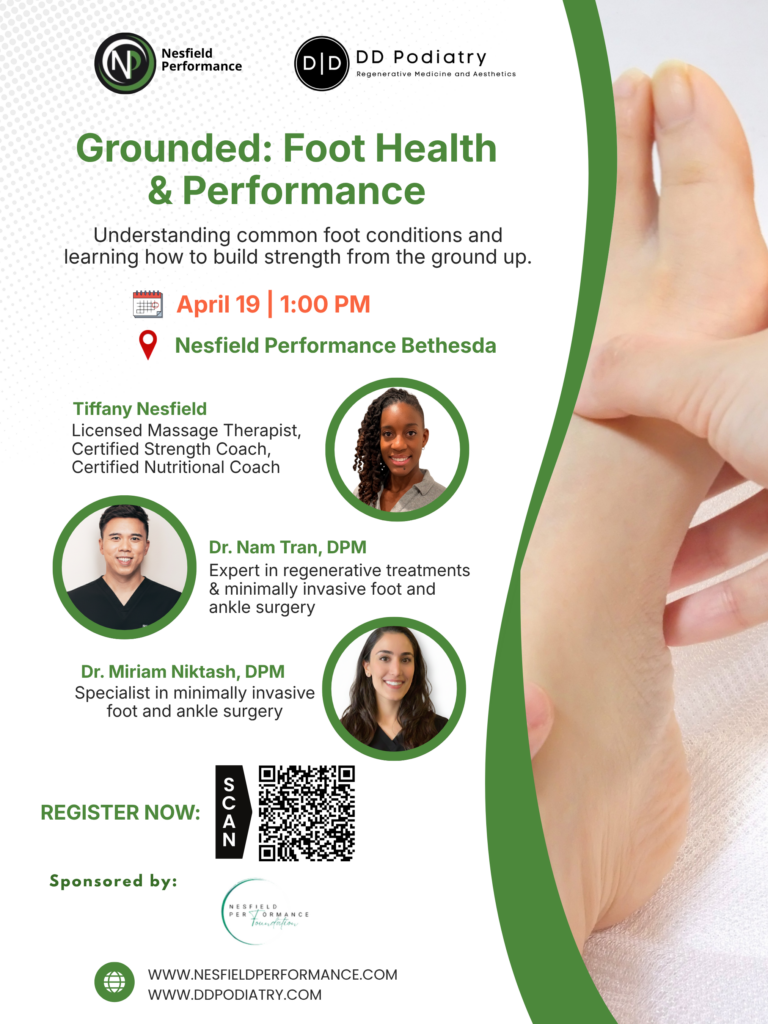
Grounded: Foot Health & Performance
This workshop will cover:
• Common foot conditions
• How foot mechanics affect movement and performance
• Strategies to strengthen the feet and improve stability from the ground up
Featuring:
- Dr. Nam Tran — Owner/ Podiatrist
- Dr. Miriam Niktash — Podiatrist
- Tiffany Nesfield — Owner / Personal Trainer
Dr. Tran and Dr. Niktash will lead the discussion on common foot conditions, treatment options, and prevention strategies. Then Tiffany will guide attendees through practical strategies to improve foot function, including hands-on stability, mobility, and strengthening exercises you can immediately apply to your routine.
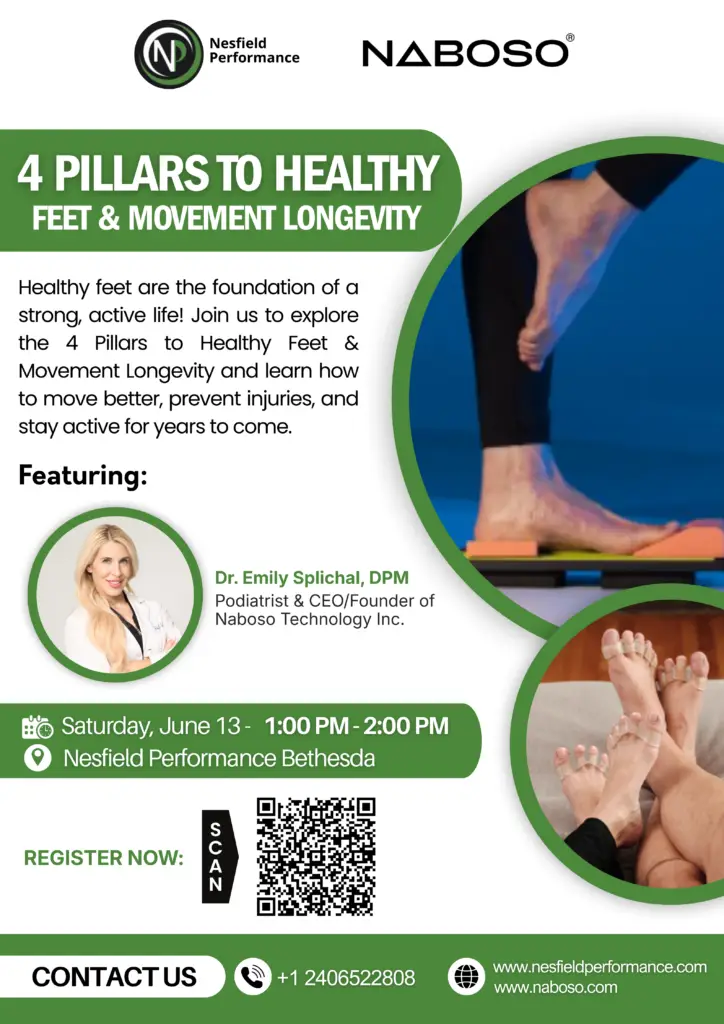
4 Pillars to Healthy Feet & Movement Longevity
During this workshop, you will:
- Understand the essential components of healthy feet
- Learn exercises to maintain strength, flexibility, and stability
- Discover how foot health impacts overall movement and daily life
- Gain actionable tips to prevent discomfort and injuries
Featuring: Dr. Emily Splichal – Podiatrist CEO of Naboso
Together we’ll explore both the clinical and performance side of foot health, and how training the feet can improve movement for athletes, gym members, and everyday individuals alike.
Sometimes the most powerful improvements in movement don’t start with bigger muscles or harder workouts. They start with something much simpler.
Getting grounded.
About the Author
Chris Njoku Moser is a Personal Trainer and Nutrition Coach at Nesfield Performance. His coaching focuses on evidence-based training, practical nutrition strategies, and helping clients cut through health industry misinformation to build sustainable habits that support long-term performance and recovery.
About Nesfield Performance
Nesfield Performance is a performance and wellness studio based in Bethesda, Maryland, dedicated to helping individuals build stronger, healthier, and more resilient bodies. Through a holistic approach that integrates strength training, movement education, nutrition guidance, recovery strategies, and mindset development, the team focuses on long-term health rather than quick fixes.
At Nesfield Performance, coaching is grounded in science and practical experience—helping clients understand how their bodies work so they can train smarter, move better, and sustain high performance throughout life.
References
Hashimoto, T., & Sakuraba, K. (2014). Strength training for the intrinsic flexor muscles of the foot: Effects on muscle strength, the foot arch, and dynamic parameters before and after the training. Journal of Physical Therapy Science, 26(3), 373–376. https://doi.org/10.1589/jpts.26.373
Mulligan, E. P., & Cook, P. G. (2013). Effect of plantar intrinsic muscle training on medial longitudinal arch morphology and dynamic function. Manual Therapy, 18(5), 425–430. https://doi.org/10.1016/j.math.2013.02.007